



Author: Logan Hardy
Editor: Taylor Latendre
Turning Indoor Golf Into a Sustainable Business Opportunity
Indoor golf is no longer just a winter activity. Across Canada, simulator facilities, golf courses, teaching studios, hospitality venues, and entertainment businesses are using simulator technology to create year-round revenue opportunities. Golf Canada has noted that commercial simulator facilities are opening in plazas, strip malls, office buildings, and golf clubs across the country, reflecting growing demand for off-course golf experiences.
For business owners, the opportunity is clear, but the path can feel less certain.
What type of simulator business should you build?
Will customers use it outside the winter months?
Can it support memberships, lessons, fittings, events, or food and beverage sales?
The answer depends on the experience you want to create.
The most successful golf simulator businesses are not built around technology alone. They are built around a clear business model, a defined customer experience, and reliable equipment that customers can trust.
Below are several of the most common commercial golf simulator business models.
1. Indoor Golf Facilities and Membership Clubs
Dedicated indoor golf facilities are one of the most recognizable simulator business models.
These businesses typically focus on golfers who want access to practice, play, and compete year-round. Customers may book simulator time by the hour, join memberships, participate in leagues, or visit regularly during the offseason.
Common revenue streams include:
- Hourly simulator rentals
- Monthly or annual memberships
- Winter leagues
- Tournaments
- Practice packages
- Corporate bookings
For this model, utilization is everything. The more consistently each simulator bay is booked, the stronger the business becomes. Industry guides commonly point to multiple revenue streams — including lessons, events, leagues, memberships, and rentals, as key to improving profitability.
This model works well for operators who want to build a golf-first destination.
2. Coaching and Player Development Studios
For teaching professionals, simulator technology creates a way to coach year-round instead of relying entirely on outdoor seasons.
A coaching-focused simulator business is built around improvement. Golfers come for instruction, swing analysis, structured practice, and measurable progress.
Common revenue streams include:
- Private lessons
- Lesson packages
- Junior programs
- Winter training programs
- Player development memberships
- Remote coaching
- Practice sessions between lessons
Launch monitor data is especially important in this model because coaches need reliable feedback on ball flight, distance, launch conditions, club delivery, and consistency. Having the right technology in place allows instructors to move beyond visual observation and provide golfers with measurable, objective feedback throughout the learning process. Solutions within the Foresight Sports technology ecosystem, including the QuadMAX launch monitor, Swing Catalyst video and pressure analysis, and PuttView putting technology integrations, help coaches build a complete player development environment. By combining ball and club data with video analysis, ground force measurements, and putting insights, instructors can deliver more personalized coaching programs, track progress over time, and create a more engaging training experience for golfers of all skill levels.
This model is ideal for instructors, academies, golf courses, and facilities focused on long-term golfer development.
3. Club Fitting and Equipment Studios
A club fitting business uses launch monitor and simulator technology to help golfers make more informed equipment decisions.
Rather than relying on feel or assumptions, golfers can compare clubs, shafts, and configurations using measurable performance data. Fitters can demonstrate differences in launch, spin, ball speed, carry distance, and shot dispersion, helping golfers understand how equipment changes affect performance.
Common revenue streams include:
- Club fitting appointments
- Equipment sales
- Shaft upgrades
- Gapping sessions
- Bag assessments
- Ongoing performance evaluations
As golfers become more knowledgeable about equipment, the demand for professional fitting services continues to grow. Many players want confidence that new clubs will produce measurable improvements before making a purchase, creating opportunities for fitters to provide a more personalized buying experience.
This business model relies heavily on trust. Customers need to know that recommendations are based on accurate information rather than opinion alone. That’s why launch monitor technology has become such an important part of the fitting process. Systems capable of measuring both ball and club performance help fitters identify the equipment combinations that best match a golfer’s swing and playing goals.
Technologies such as the Foresight Sports QuadMAX are commonly used in fitting environments because they provide detailed performance insights that support equipment comparisons and purchasing decisions. When golfers can clearly see the difference between one setup and another, they gain greater confidence in the fitting process and the recommendations being made.
For club fitters, launch monitor accuracy is not simply a feature, it is a critical part of building customer confidence and delivering a professional fitting experience.
4. Golf Courses and Private Clubs
For golf courses and private clubs, simulators can extend member engagement well beyond the outdoor season.
One of the biggest challenges many facilities face is maintaining relationships with golfers during the offseason. While members may remain loyal to the club, opportunities to practice, play, socialize, and participate in club activities often become limited once the course closes for the winter.
Simulator technology helps bridge that gap by creating a year-round golf experience.
Instead of losing touch with golfers for several months, facilities can offer indoor programming that keeps members active, connected, and engaged with the club throughout the offseason.
Common revenue opportunities include:
- Winter leagues
- Member simulator bookings
- Offseason lesson programs
- Club fitting days
- Indoor tournaments
- Private events
- Practice memberships
Many facilities are also finding creative ways to utilize existing space. Simulator bays can be installed in underutilized banquet rooms, practice facilities, teaching areas, or seasonal spaces that would otherwise generate little to no revenue during the winter months.
To add, space limitations don’t necessarily prevent facilities from offering indoor golf experiences. While some clubs choose permanent simulator installations, others utilize more flexible solutions that can be installed seasonally and removed when outdoor operations resume. Simulator-in-a-Box (SIAB) configurations can be an attractive option for facilities that need to maximize the use of banquet halls, event spaces, teaching areas, or other multipurpose rooms. This allows clubs to generate offseason revenue and member engagement during the winter months without permanently dedicating valuable floor space year-round.
Beyond revenue generation, simulators can help strengthen member retention and engagement. Golfers are able to continue working on their game, participate in club competitions, and socialize with fellow members even when outdoor golf is not available. This helps maintain a connection to the club and keeps golf top-of-mind throughout the year.
For facilities with teaching professionals and club fitting programs, simulators can also support additional services during the offseason. Lessons, practice plans, player development programs, and equipment fittings can continue regardless of weather conditions, creating new opportunities to serve members and guests.
Some clubs are even using simulator technology to host member nights, corporate functions, and winter events that bring new visitors through the door while creating additional food and beverage revenue opportunities.
For golf courses and private clubs, the value of a simulator often extends beyond the simulator bay itself. It becomes a tool for increasing engagement, expanding programming, creating offseason revenue, and maintaining strong relationships with golfers year-round.
5. Bars, Lounges, Restaurants, and Hospitality Venues
Not every simulator business is built around game improvement.
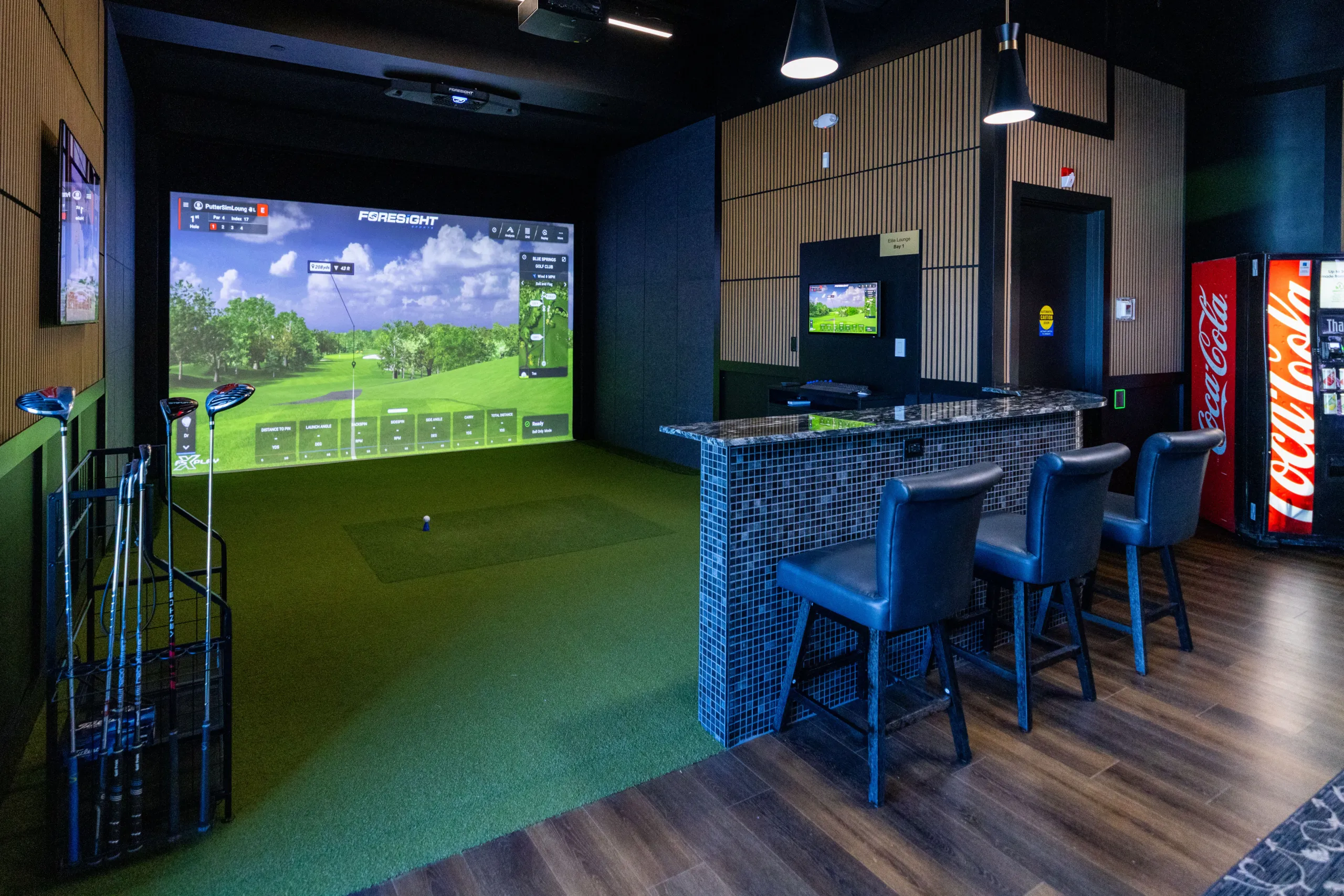
Restaurants, breweries, lounges, hotels, and entertainment venues are increasingly using golf simulators as social attractions that enhance the overall guest experience. In these environments, the simulator becomes part of a broader hospitality offering, creating a destination where guests can play, socialize, eat, and drink in one location.
Customers may visit for:
- Group outings
- Corporate events
- Team-building activities
- Birthday parties
- Casual rounds with friends
- Food and beverage experiences
- Social leagues
The goal is not always to attract avid golfers. In many cases, the objective is to create a fun and accessible activity that appeals to a wide range of customers regardless of their skill level.
For hospitality operators, simulators can help increase guest dwell time, encourage repeat visits, and create opportunities for higher food and beverage sales. A group that books a simulator bay often stays longer than a typical dining customer, creating additional opportunities for revenue throughout their visit.
Many businesses also use leagues, themed events, and seasonal promotions to keep customers engaged throughout the year. Because golf simulators can accommodate both experienced players and complete beginners, they provide an activity that is easy for groups to enjoy together.
Unlike traditional entertainment offerings, simulator golf creates a highly interactive experience that encourages competition, conversation, and social engagement. For hospitality businesses looking to differentiate themselves in a competitive market, indoor golf can become a unique attraction that drives both traffic and customer loyalty.
6. Corporate Wellness and Workplace Engagement
Golf simulators are also finding a place in corporate environments as organizations look for new ways to support employee wellness, engagement, and workplace culture.
Rather than focusing on revenue generation alone, these installations are often designed to create experiences that encourage employees to connect, recharge, and stay active throughout the workday.
Organizations may utilize simulator spaces for:
- Employee wellness initiatives
- Team-building activities
- Staff appreciation events
- Client entertainment
- Networking opportunities
- Charity tournaments and fundraisers
- Lunch-and-learn events
- Workplace recreation programs
Beyond recreation, many organizations are designing simulator spaces as flexible environments that can serve multiple purposes throughout the day. A simulator can quickly transform into a meeting space for presentations, company updates, training sessions, client meetings, or team workshops. Large impact screens can be used to display slideshows, performance dashboards, project highlights, company announcements, or presentations for high-priority guests and stakeholders.
This flexibility allows organizations to maximize the value of the space while creating an environment that supports both productivity and engagement. Teams can gather for collaborative discussions, host client events, celebrate company milestones, or unwind with a round of golf after a productive meeting.
For organizations that regularly host customers, partners, or executive visitors, simulator spaces can also serve as a unique hospitality and relationship-building tool. The combination of professional meeting capabilities and interactive entertainment creates a memorable experience that helps foster stronger connections in a relaxed setting.
Whether used for employee wellness, workplace collaboration, client engagement, or corporate events, golf simulator spaces offer organizations a versatile solution that brings people together and supports a more connected workplace culture.
7. Activity Centres and Complementary Entertainment Businesses
Not every business that installs a golf simulator starts in the golf industry.
Many activity-based businesses, including bowling alleys, rock climbing facilities, recreation centres, multi-sport complexes, and family entertainment venues, are using simulator technology to expand their offerings and attract new customers.
For these businesses, golf often serves as a complementary activity rather than the primary attraction.
Common objectives include:
- Creating additional revenue streams
- Increasing customer dwell time
- Attracting new customer demographics
- Enhancing membership offerings
- Providing year-round entertainment options
- Maximizing underutilized space
A climbing gym, for example, may use a simulator lounge as a social space where members can relax before or after a session. A bowling Alley may add simulator bays to diversify its entertainment offerings and encourage repeat visits. Multi-sport facilities can provide golf alongside existing sports and recreational activities.
To add, one of the biggest advantages of modern simulator technology is its versatility. While golf may be the primary attraction, many facilities also incorporate arcade-style challenges, closest-to-the-pin competitions, long-drive contests, and other interactive experiences that appeal to players of all skill levels. Some platforms also support additional sports simulations and family-friendly games, helping operators engage a broader audience beyond traditional golfers.
For businesses already focused on delivering memorable experiences, golf simulators can become a natural extension of their existing offerings, helping attract new visitors while providing current customers with another reason to return.
Choosing the Right Golf Simulator Business Model
The best commercial simulator setup depends on your space, audience, and goals.
If your audience is serious golfers, a practice facility, coaching studio, or fitting environment may make the most sense.
If you already operate a golf course or private club, simulators can help maintain offseason engagement.
If your business is hospitality-focused, a simulator lounge or entertainment model may create new reasons for customers to visit, stay longer, and book group events.
If you want the strongest long-term opportunity, consider how multiple revenue streams can work together.
Build With Confidence
At Foresight Sports Canada, we work with commercial clients across the country to design simulator solutions that align with their space, goals, audience, and revenue strategy.
Whether you are opening an indoor golf facility, adding simulators to a golf course, building a coaching studio, launching a club fitting business, or creating a golf entertainment venue, the right technology can help you build an experience customers want to come back to.
Ready to explore a commercial golf simulator solution?
Contact us today to discuss your space, goals, and vision for your business.
FAQs
Can golf simulators generate revenue year-round?
Yes. Golf simulators can support revenue through hourly rentals, memberships, leagues, lessons, club fittings, events, and food and beverage sales.
What types of businesses can benefit from golf simulators?
Indoor golf facilities, golf courses, private clubs, teaching academies, club fitting studios, restaurants, bars, lounges, hotels, and entertainment venues can all benefit from simulator technology.
What is the best golf simulator business model?
There is no single best model. The right approach depends on your audience, space, and business goals. Many successful operators combine bookings, memberships, coaching, fittings, leagues, and events.
Are golf simulators only popular in winter?
No. Winter demand is strong in Canada, but simulators can also generate revenue year-round through practice, coaching, fittings, leagues, corporate events, and entertainment bookings.
Why is launch monitor accuracy important for commercial facilities?
Accuracy affects the customer experience. Golfers, coaches, and club fitters need reliable data, realistic ball flight, and trusted performance feedback.
Can restaurants and bars make money with golf simulators?
Yes. Hospitality venues can use simulators to attract groups, increase visit length, host corporate events, and create additional food and beverage revenue opportunities.
How can Foresight Sports Canada help commercial clients?
Foresight Sports Canada can help identify the right launch monitor, simulator setup, software, and commercial configuration based on your space, goals, and customer experience.


