



Author: Logan Hardy
Editor: Alex Papineau
Let’s start with a question most golfers never ask until it’s too late.
When you picture your dream golf simulator, what do you see?
Maybe it’s a launch monitor, a screen and a projector. Maybe it’s a net and a hitting mat tucked into the corner of the basement.
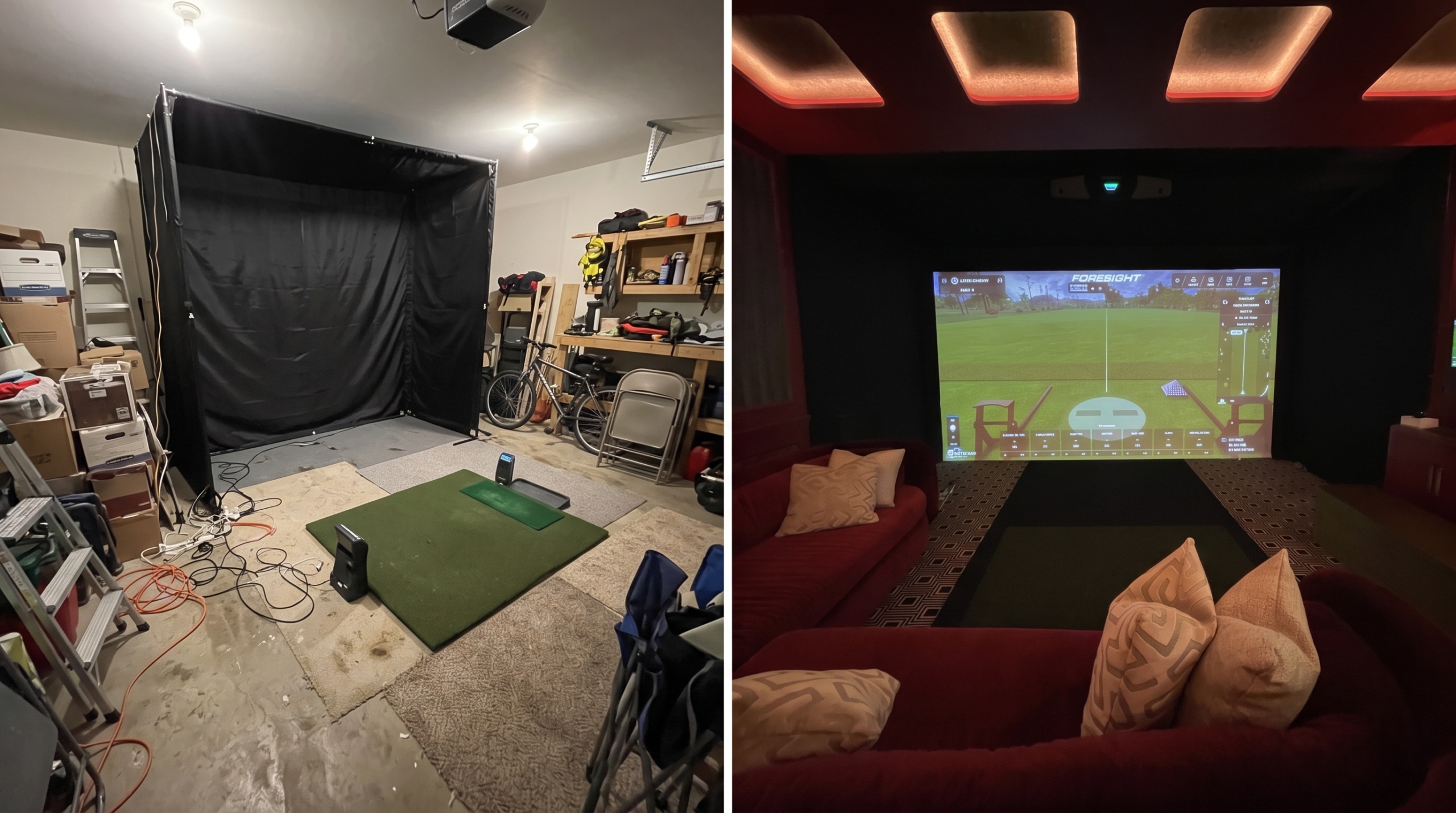
Now picture something different. A room that looks like it was always meant to be there. Lighting that feels intentional. A screen that’s perfectly sized to the space. A swing that feels unrestricted. Sound that stays where it belongs. A setup that works on the first night, and still works five years from now.
Those two pictures can use the very same equipment. The difference between them isn’t the technology. It’s the design.
A Simulator Is a Room, Not a Product
It’s easy to see why golfers approach a simulator like any other purchase. You compare launch monitors, read specs, weigh software options and find a projector that looks right on paper.
But a premium simulator isn’t something you buy and plug in. It’s something you build.
Every component has to work with every other component, and all of them have to work inside a physical space with its own limits. A ceiling is only so high. A room is only so wide. A projector has a specific throw distance. A wall has wiring behind it. A floor has to take thousands of swings.
When those pieces are chosen separately, problems show up late and cost more to fix. When they’re designed together, the whole room works the way it should.
That’s the difference between buying equipment and building a space.
Everything Your Simulator Depends On
A well-designed simulator brings together a lot more than most people expect. Here’s what a good design process has to account for.
Room Dimensions and Layout
The room comes first. Width, depth and ceiling height shape what’s possible, from how freely you can swing to where the screen, hitting area and seating can go. A design that ignores the room’s real dimensions can leave you with a cramped swing, a compromised screen or a launch monitor that can’t be positioned correctly.
Technology Placement
Launch monitors need to be positioned properly to read the ball and club accurately. The right placement depends on the technology you choose, the room’s layout and how you play, including whether you’re going to have both lefties and righties playing, or if you would like the flexibility to move the launch monitor outside. Getting this right is what makes the experience the best.
Throw Distance and Sightlines
Projectors don’t work just anywhere. Throw distance determines how large and sharp the image can be from a given position, and where the projector is mounted affects everything from shadows to glare. Sightlines matter too, for the player, for anyone watching and for how the room feels when you walk in.
Electrical and Connectivity
Power, data connections, computers, projectors and lighting all have to be planned in. It’s far easier and cleaner to run these during the build than to retrofit them after the finishes are done. Good planning also keeps cables and equipment out of sight. If you are putting a simulator into an existing room, we can plan the build around the existing electrical work, taking away the headache most simulator builders feel.
Flooring and Hitting Surface
The floor is part of the performance of the room. The hitting area has to feel right underfoot, hold up to repeated use and complement the rest of the space. It’s a detail that’s easy to overlook and hard to ignore once it’s wrong.
Impact Screens, Enclosures and Safety
The screen and enclosure do more than display an image. They absorb impact, protect the room and shape the experience. Choosing the right materials and building a proper enclosure helps protect both the space and the people in it, as well as a quality screen helps provide the most immersive experience with crisp visuals.
Acoustics and Lighting
A simulator is a surprisingly loud room, and it’s also a room where lighting can make or break the picture. Thoughtful acoustic treatment and well-planned lighting make the space more comfortable and the image more vivid, whether you’re practicing alone or hosting friends.
Aesthetics
For many golfers, this is where the project becomes personal. A simulator can be a sleek, modern lounge, a classic clubhouse-inspired space or a clean, professional studio. Finishes, colours, seating and décor all contribute. The goal is a room that suits your home or business, not one that looks like equipment in a corner.
Future Servicing and Upgrades
Technology changes, and so do your needs. A well-designed simulator leaves room for access, maintenance and future upgrades. That might mean easy access to equipment, planned space for additional components or a layout that doesn’t have to be torn apart to be updated.
Why These Decisions Can’t Be Made in Isolation
Here’s the challenge. Each of those decisions affects the others.
- The projector you choose affects ceiling and mounting requirements.
- The room’s dimensions affect where the launch monitor can go.
- The screen size affects sightlines and seating.
- The lighting affects how the projected image looks.
- The flooring and enclosure affect both feel and safety.
- The electrical plan affects every piece of technology in the room.
When these choices are made one at a time, often by different people, the odds of a mismatch go up. A great projector in the wrong spot. A great launch monitor in a room that doesn’t suit it. A beautiful finish that has to be cut open to fix a wiring issue.
Designing the room as one integrated system avoids that. Each decision is made with the others in mind.
The Value of Professional Design and Integration
This is where an experienced design partner earns their place.
A professional simulator designer thinks about your project the way an architect or custom builder thinks about a home. They start with your space, your goals and the way you want to use the room. Then they bring together the technology, the construction details and the finishes into a single plan.
That approach offers real advantages:
- Fewer surprises. Problems are caught on paper, not after installation.
- Better performance. Equipment is placed and configured to work properly in your specific room.
- A more polished result. The technology and the design feel like they belong together.
- One coordinated plan. Technology, construction and finishes work together instead of competing.
- A room that’s ready for the future. Servicing and upgrades are considered from the start.
It’s also worth saying what good design is not. It isn’t about adding cost for its own sake. It’s about making sure every dollar you spend works toward a room that performs and lasts.
What Happens When a Simulator Is Just “Assembled”
We see it often. A golfer buys a launch monitor, a projector and a net, sets everything up and finds that something isn’t quite right.
The swing feels restricted. The image isn’t as sharp as expected. The room gets too bright, or too loud. Cables are everywhere. A key piece of equipment is hard to reach.
None of these are failures of the technology. They’re the natural result of building a room without a plan for the whole space.
The good news is that most of these issues are avoidable. They just need to be considered early, by someone who has seen how these rooms come together.
Why Foresight Sports Canada Takes a Design-First Approach
At Foresight Sports Canada, we don’t think of ourselves as an equipment supplier. We think of ourselves as a partner in building a space.
Our team works with golfers, coaches and business owners across the country, from home basements and backyard retreats to coaching studios and commercial venues. Every project starts the same way: with a conversation about your space, your goals and the experience you want.
From there, we help you plan the technology, the layout and the details that make the room work, so that what gets built is what you imagined, and performs the way you expected.
Whether you’re creating a simulator at home or planning a commercial facility, you don’t have to figure it out alone.
Questions to Ask Before You Choose Who Designs Your Simulator
If you’re deciding who should design and build your simulator, here are a few questions worth asking:
- Will they assess my actual space, or work from a generic template?
- Do they plan the technology, construction and finishes together?
- Who coordinates the electrical, flooring and enclosure details?
- How do they handle sightlines, projector placement and lighting?
- What happens if I want to upgrade or service the system later?
- Who do I call after the installation is complete?
The answers will tell you a lot about whether you’re buying equipment or building a space.
Build the Room, Not Just the Setup
The best golf simulators aren’t defined by a single piece of technology. They’re defined by how well everything comes together.
When the design is right, the room fades into the background and the golf takes over. You’re not thinking about throw distance or sightlines. You’re standing on the first tee, with a group of friends and a winter storm outside, enjoying a space that was built for exactly this.
That’s what good design delivers.
So before you buy the equipment, ask the bigger question: who’s going to design the room?
FAQs
Do I need a professional to design my golf simulator?
You can assemble a basic setup yourself, but a premium simulator involves technology, construction, electrical, lighting and layout decisions that all affect one another. A professional design process helps ensure everything works together in your specific space.
What should a simulator design take into account?
Room dimensions, ceiling height, launch monitor placement, projector throw distance, sightlines, electrical and data requirements, flooring, impact screen and enclosure, acoustics, lighting, aesthetics and future servicing.
Can Foresight Sports Canada help with my specific room?
Yes. Our team works with you to understand your space, goals and budget, then helps design a simulator that fits your room and the way you want to use it.
Is a custom design only for large or luxury projects?
No. Good design matters whether you’re building a compact home setup or a full commercial facility. The scale changes, but the need to plan the space properly does not.
What if I want to upgrade my simulator later?
That’s one of the reasons design matters. A well-planned room leaves space and access for future servicing and upgrades.
How do I get started?
Contact the Foresight Sports Canada team to talk through your space, your goals and your ideas. You can also explore our Design Your Simulator tool to start planning.


